

 Conference
Live Replay WebinarBasic level
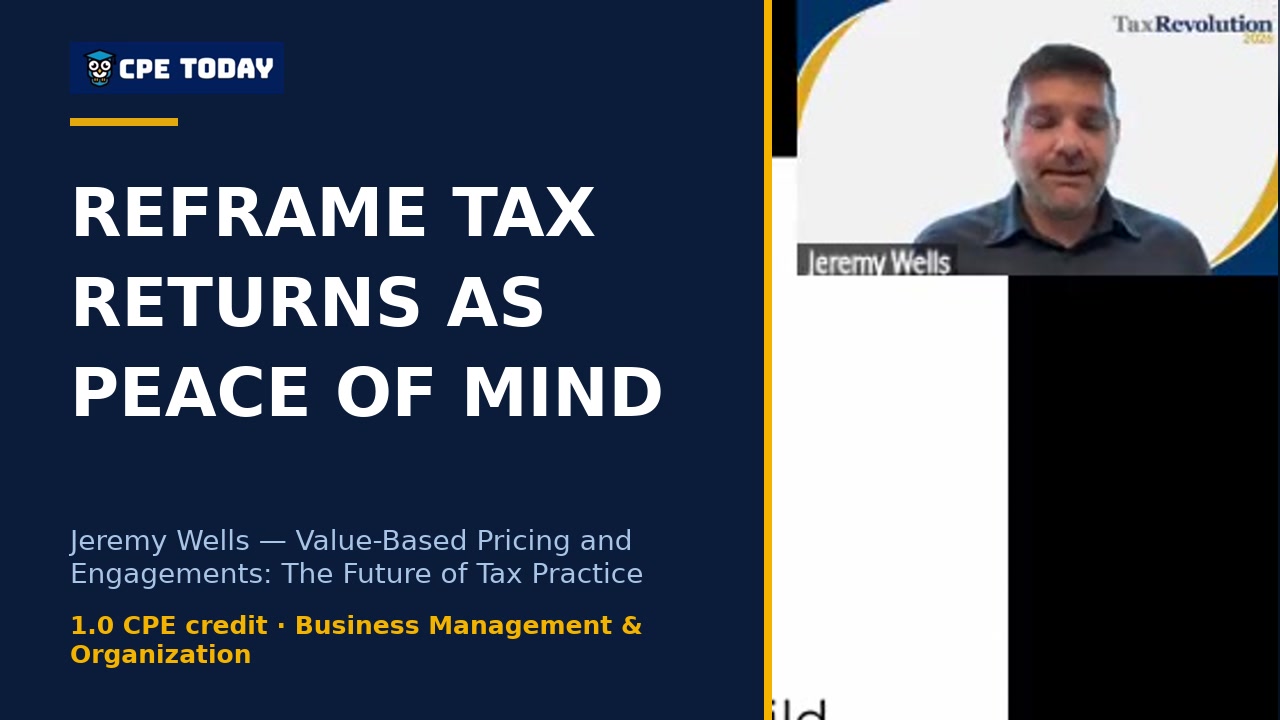
Value-Based Pricing and Engagements: The Future of Tax Practice
★★★★★
4.5 · 13 attendee ratings
This session explores how modern tax professionals can confidently transition to value-based pricing and streamline their engagements using Ignition. This session will provide actionable insights into building a future-proof tax practice. Attendees will walk through the shift away from outdated hourly billing to value-based engagements that drive profitability and client satisfaction. You’ll also see how to take advantage of Ignition’s ready-made proposal templates—complete with suggested value pricing—that can be tailored to your tax services. In addition, we’ll showcase powerful Ignition integrations with tools like ProConnect and QuickBooks Online (QBO) that make it easier than ever to automate client onboarding, billing, and payment collection—freeing up time and improving your bottom line. Whether you’re a solo practitioner or running a multi-staff firm, this session is designed to help you confidently package your services and deliver consistent client experiences with maximum efficiency.
Ways to save
Pay with a credit pass
This course is 1 credit, paid from your credit balance at checkout.
The 10-Credit Pass ($275.00) pays for it and leaves you 9 credits for more.
Year-end bonus: up to 5 free credits through Dec 31.
Certain conditions apply: not valid for the Federal Tax Update. Pass terms
Watch
What's included
Every registration comes with the course materials — yours to keep.
- Course handout PDF
- Additional course files PDF
Course details
- Recommended CPE credit
- 1
- Field of study
- Business Management & Organization
- Program level
- Basic
- Delivery method
- Group Internet Based
- Prerequisites
- None
- Advance preparation
- None
- Course number
- 26c01505
CPE Today (Devmatics, LLC) is registered with the National Association of State Boards of Accountancy (NASBA) as a sponsor of continuing professional education on the National Registry of CPE Sponsors (Sponsor ID 167619). State boards of accountancy have final authority on the acceptance of individual courses for CPE credit. Complaints regarding registered sponsors may be submitted to the National Registry of CPE Sponsors through its website, nasbaregistry.org. For information about our refund, complaint, and program cancellation policies, see Company Policies or contact [email protected].
💬 Ask this course
Not sure it covers what you need? Ask a real question — answered from the actual course content, so you can decide before you enroll.
Reading the course…
Answers come from this course's own material and can be imperfect — the full details are in the course itself.
Your instructor

Jeremy Wells
· ★ 4.2 instructor rating
Jeremy Wells Jeremy Wells, EA, CPA, is COO and Head of Tax at Steadfast Accounting. He became an enrolled agent in 2018 and a Florida certified public accountant in 2022. He is a member of the American Institute of Certified Public Accountants (AICPA), the National Association of Tax Professionals (NATP), and the National Association of Enrolled Agents (NAEA). He helps tax professionals with educational and...
Full profile →Attendee feedback
4.5
13 attendee ratings
Common questions
Will this approach work for my tax practice, or is it really just for larger firms?
Value-based pricing works at any firm size, from solo practitioners to regional firms. Jeremy ran his own solo firm using this model and now uses it as COO at a mid-sized firm. The key is that you package services around the actual value clients receive—like peace of mind knowing someone has their back if an IRS notice shows up—not around your hourly effort. Smaller firms often have an advantage here because you're closer to clients and can understand their real needs better than large firms can.
How is value-based pricing different from just charging more for the same work?
Value-based pricing isn't simply a markup; it's a fundamental shift in how you frame what you deliver. Instead of saying "I'll prepare your tax return," you're saying "You'll have a tax professional on your side if problems arise." The work might be identical, but the client perception of value—and therefore what they're willing to pay—changes dramatically. You're also genuinely changing what you offer by bundling tax returns with tax projections, cash flow planning, and proactive advice rather than filing-focused services alone.
I'm worried about sticker shock when I propose new pricing to clients. How do you prevent that?
Present pricing in tiered packages rather than as a single proposal. Instead of telling a client "this will cost $3,500," offer a basic tier, middle tier, and premium tier at different price points. This lets clients self-select into what fits their budget rather than receiving one number and walking away. Jeremy learned this the hard way—clients often aren't shocked at higher prices when they see options; they're shocked when a single proposal feels out of proportion to their expectations.
Do I need new software to implement value-based pricing and tiered packages?
No, but automation tools make the process much smoother. Jeremy emphasized that the core principles are technology-agnostic—you can implement them with any software stack. That said, tools like Ignition that integrate with your tax software (like ProConnect) eliminate manual double-entry, reduce errors, and automatically move clients through onboarding, proposals, and payment collection. When you're managing multiple service tiers and packages, automation takes friction out of the entire client lifecycle.
How do I know what to include in each service tier if I'm just starting out?
Start with a template (don't build from a blank page), then adapt it to your firm's actual experience. Jeremy recommends thinking about what's absolutely essential for working with your firm, then layering in optional services like monthly cash flow planning versus quarterly, or weekly P&L reviews versus annual. You don't have to get it perfect the first time—he changes packages for almost every new client as he learns what works. Treat it as an ongoing experiment where you review, adjust, and improve your tiers based on real client conversations and feedback.
Related reading from our instructors
You might also like
Conference
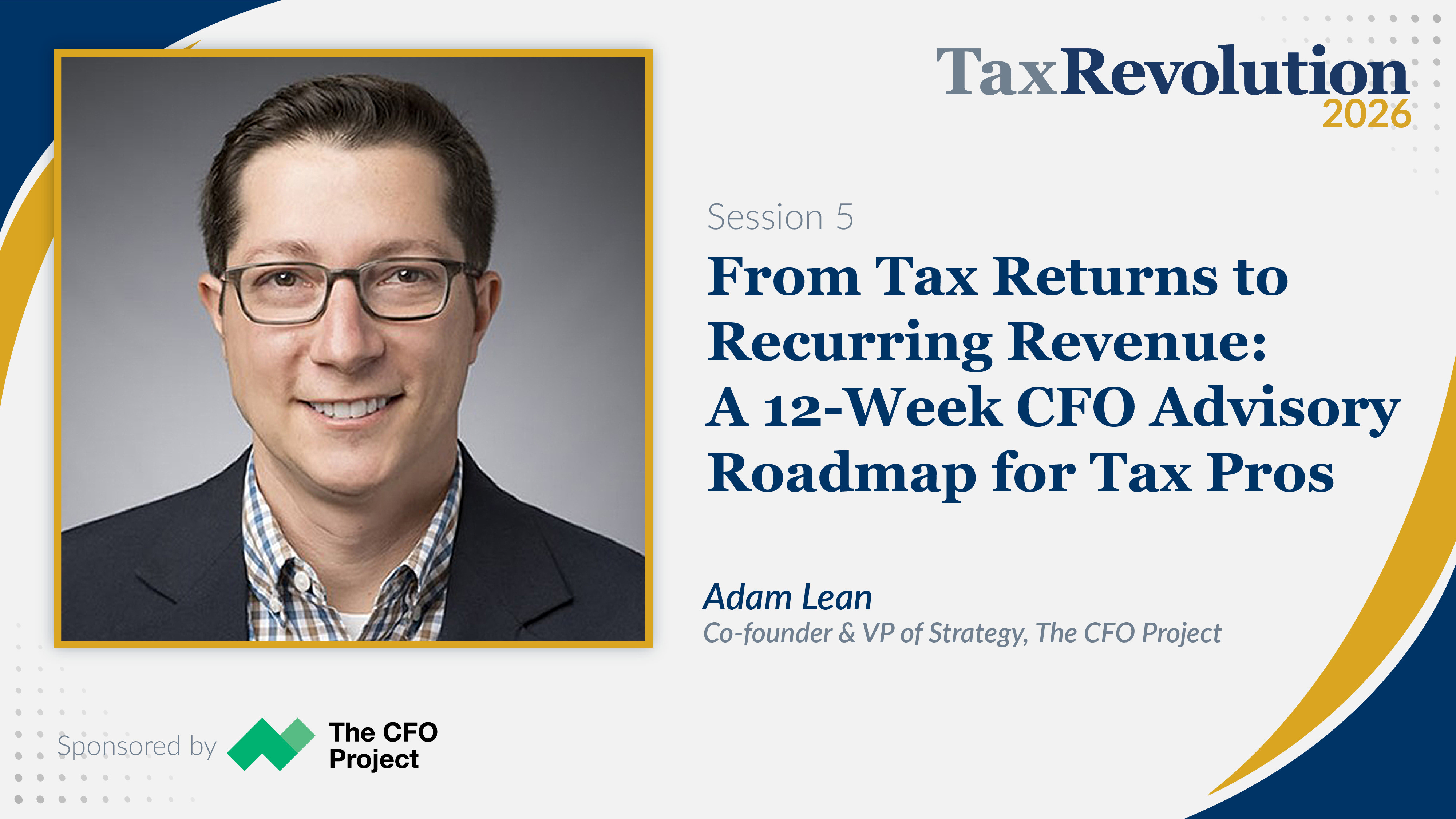
From Tax Returns to Recurring Revenue: A 12-Week CFO Advisory Roadmap for Tax Pros
Business Management & Organization
★★★★★
4.7 (13)
Free · Live Replay

Scale Through Acquisition or Plan Your Exit on Your Terms: A Guide for Firm Owners
Business Management & Organization
★★★★★
5.0 (11)
Free · Live Replay

K2’s Innovative Strategy And IT Governance
Business Management & Organization
★★★★★
4.8 (6)
$30 · Live Replay
Live dates from $800/day