
Business Continuity CPE: What CPAs Actually Need to Know Before Something Goes Wrong
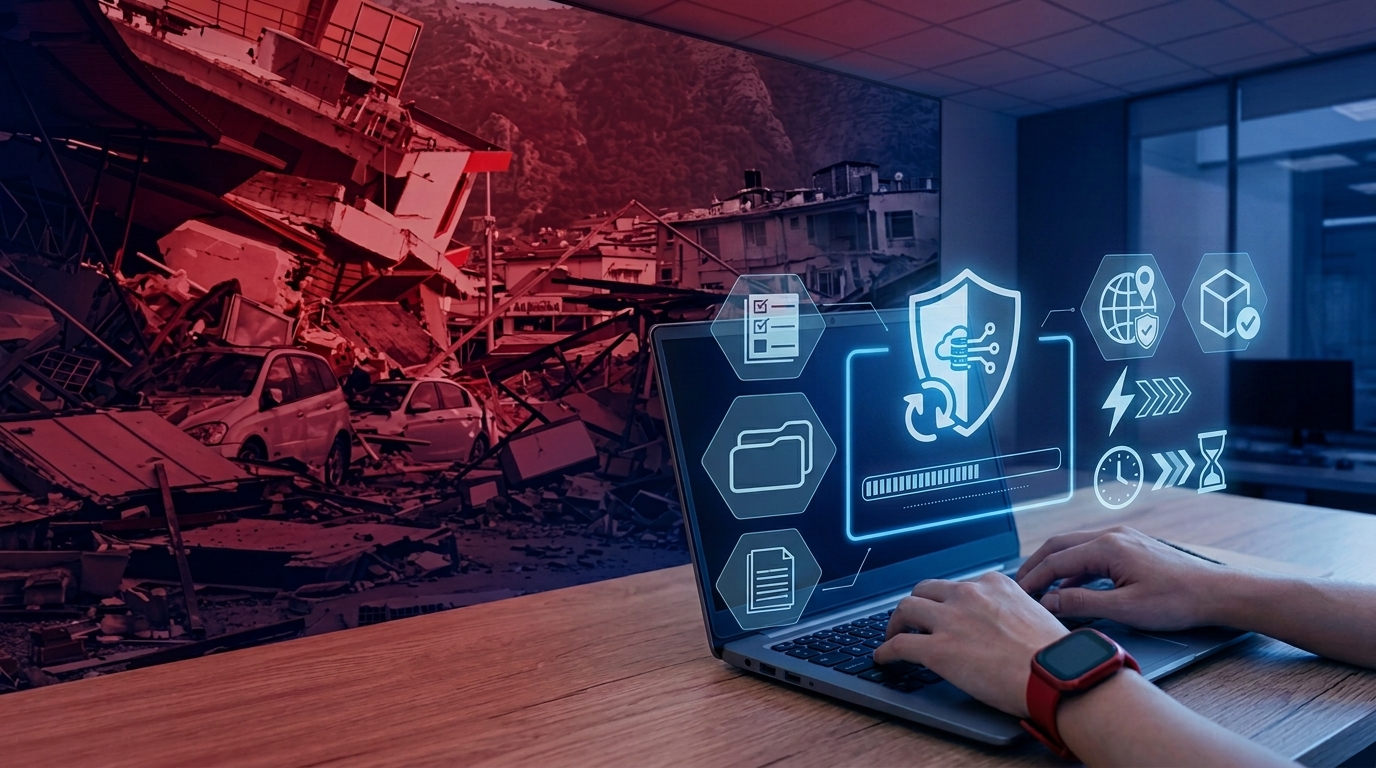
Business continuity CPE exists precisely because the gap between meaning to prepare and actually being ready is where organizations go out of business. Nobody plans a disaster for a convenient Tuesday in March. They show up during tax season, right before a client deadline, or on the Friday afternoon you finally took off. And when they do, the first thing most CPAs discover is that they've been meaning to think about this for a while.
Why Business Continuity Matters for CPAs and Finance Teams Right Now
Think about the worst possible moment for your firm's server to go down. Tax season, final week. A major client audit starting Monday. The Friday before a holiday weekend when half your staff is already gone. That is exactly when it happens. Not because the universe is cruel, though it can feel that way, but because those are the moments when your systems are under the most load, your team is most stretched, and nobody has the bandwidth to deal with anything unexpected. Disasters don't schedule themselves around your calendar.
That timing problem matters more than most people realize, because the first 24 hours after something goes wrong are the window that determines whether you recover quickly or whether you're still piecing things together three weeks later. In that window, you need to know how you're getting back online, how you're keeping your staff safe and organized, and how you're communicating with clients and stakeholders who are already wondering why their CPA isn't calling them back.
If you haven't worked through those questions before the crisis, you'll be working through them during it. That is a terrible time to think clearly.
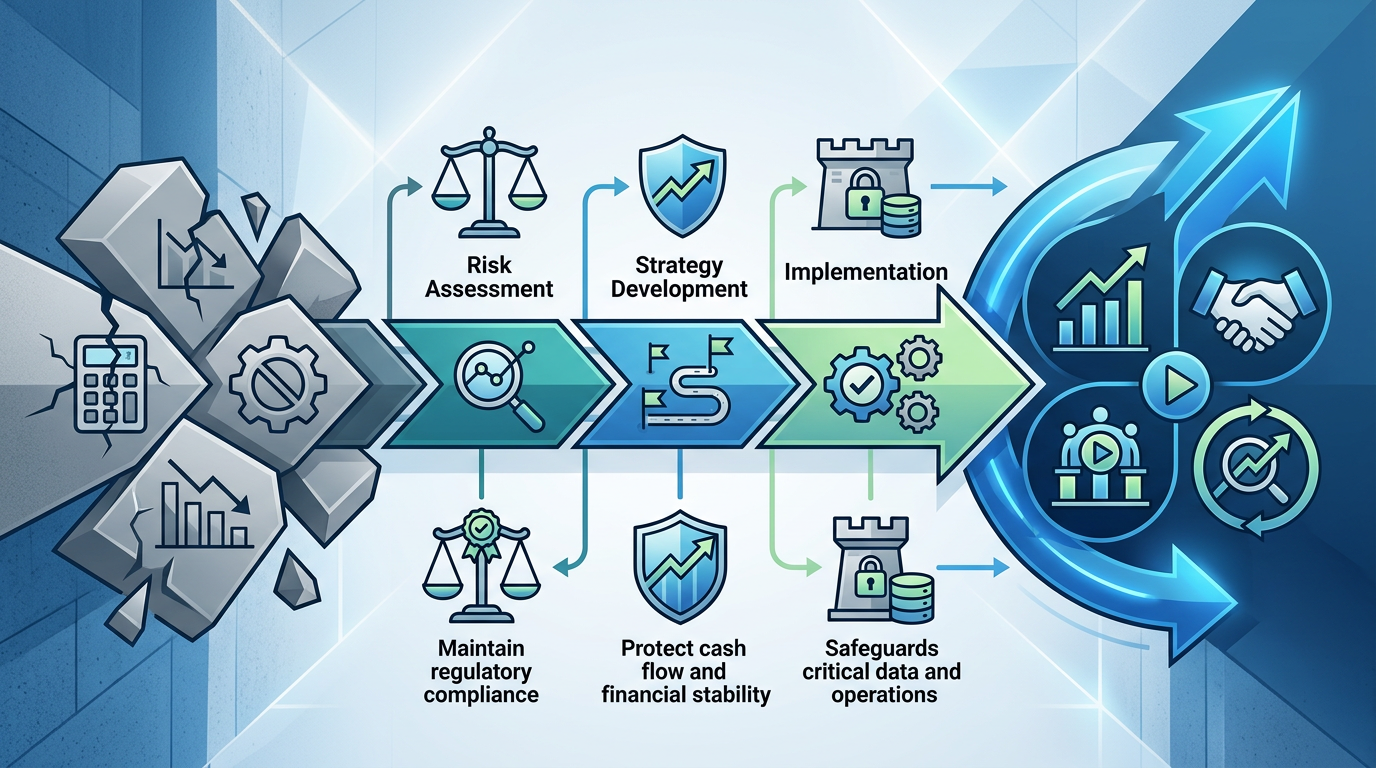
The financial exposure is direct and it compounds fast. Every minute your systems are down is a minute of lost productivity, a deadline you can't meet, a client deliverable that slips, a billing cycle that stalls. An organization that loses access to its data or communications for a prolonged stretch faces a real risk of not surviving it. That's not a hypothetical worst case. It's the logical end of a chain that starts with a single unresolved outage and runs straight through client trust, regulatory obligations, and cash flow.
Which brings up the client expectations piece, because this is where CPAs feel the pressure most acutely. Your clients expect you to have answers when something goes sideways. If your firm gets hit by a ransomware attack or a flood wipes out your office, your clients and stakeholders need to hear from you: what happened, what you're doing about it, and when things will be back to normal. That communication plan has to exist before the event, because you won't have the time or the clarity to build it after.
The range of what qualifies as a disaster is wider than most accounting professionals assume. Floods and fires are obvious. Data breaches and ransomware are increasingly common. But the course material also covers employee misconduct and the loss of a critical team member, the person who knows where everything is, who holds the client relationships, who manages the systems nobody else fully understands. Any of those events can bring an organization to its knees just as effectively as a natural disaster. The framing that matters here isn't if something like this happens to your firm. It's when it does, how prepared are you?
CPAs are increasingly the right people to lead this conversation inside their organizations, and not only because they understand financial risk. The role has expanded. Financial leaders now sit at the intersection of financial oversight and technology governance, evaluating systems, managing vendors, advising on cloud strategy, and signing off on the tools the organization depends on every day. Business continuity planning isn't a separate IT function that someone else handles. It's a governance responsibility, and it belongs in the same professional lane as audit readiness, internal controls, and risk management. If you're advising clients on their financial health, their ability to survive a disruption is part of that picture.
What Is Business Continuity in Accounting?
Most people use "business continuity" and "disaster recovery" interchangeably. They're related, but they're not the same thing, and the distinction matters when you're building a real plan. Business continuity is the broader capability: the plans and resources that keep your organization operating, or get it back to operating, when something goes wrong. Disaster recovery is the specific technical piece inside that, covering how you get your systems and data back online. You need both. Disaster recovery without a continuity plan means your servers are back up but nobody knows who's calling clients, where staff are working, or whether the files you restored are actually intact.
The scope of what a continuity plan has to cover is wider than most firms expect. The obvious disasters are natural ones: a flood, a fire, a tornado that takes out your building. But the source material for this course is deliberate about including man-made calamities. Data breaches, ransomware attacks, and employee misconduct all make the list. So does something quieter and more common than any of those: losing a critical team member. If your firm's entire tax workflow lives in one person's head and that person is suddenly gone, you have a continuity problem even if every server is running perfectly.
That range of scenarios forces the plan to answer three questions simultaneously, under pressure. How do you get back online? How do you organize a safe, functional work environment for your staff? And how do you communicate with your stakeholders about what happened and what you're doing about it? Those questions feel manageable one at a time. The problem is that a real disaster hands them to you all at once, usually on a bad day.
For accounting and finance organizations specifically, data is the asset that sits at the center of all three. Losing access to client records, financial statements, or tax files is a direct threat to the firm's ability to function and, in some cases, to its legal obligations. Data loss is one of the most consequential outcomes any of these scenarios can produce, which is why the technology decisions around protecting it aren't really IT decisions. They're business survival decisions.
That's where cloud redundancy, hot and cold sites, and proper backup practices come in. A hot site is a fully operational secondary environment you can fail over to almost immediately. A cold site is a pre-arranged location with infrastructure in place but not actively running: it takes longer to bring online but costs less to maintain. Neither one matters if your backup data isn't trustworthy.
Immutable backups, copies that can't be altered or deleted even by ransomware, are a specific protection worth understanding. Modern ransomware variants are documented to target connected backup systems. If your backups can be overwritten, they can be compromised.
Data sovereignty is another layer that finance professionals often overlook. When your data lives in the cloud, the jurisdiction where those servers sit can affect which laws govern access, retention obligations, and breach notification requirements. That's a regulatory compliance question, not just a technical one, and it belongs in the continuity conversation.
None of this stays theoretical if you actually test it. Tabletop drills, structured walkthroughs where your team talks through a simulated disaster scenario, are how you find the gaps before the real thing does. And post-recovery validation is how you confirm that the data you restored is actually complete and accurate, not just present. Recovering corrupted files on schedule is not a recovery. It's a delayed problem.

Business continuity is the full organizational plan for staying operational when something goes wrong — people, processes, communications, and facilities. Disaster recovery is the technical subset of that plan focused on restoring IT systems and data. You can have disaster recovery without business continuity, but you can't have a complete continuity plan without addressing disaster recovery.
A hot site is a secondary environment that mirrors your primary systems and can be activated quickly — sometimes within hours. A cold site is a pre-arranged location with the infrastructure in place but not actively running, which means it takes longer to bring online. The right choice depends on how much downtime your organization can realistically absorb.
Immutable backups are copies of your data that can't be modified or deleted after they're written — not by an administrator, and not by ransomware. Conventional backups can be targeted and encrypted in the same attack that hits your live environment. Immutable backups break that chain, giving you a clean restore point even if everything else is compromised.
A tabletop drill is a structured, discussion-based exercise where your team walks through a simulated disaster scenario to identify gaps in your plan before a real event exposes them. Nobody has to actually take a system offline — the value comes from talking through who does what, in what order, and discovering where the plan breaks down or where roles are unclear.
Data sovereignty refers to the legal principle that data is subject to the laws of the country or jurisdiction where it's stored. When client financial data lives on cloud servers in a different jurisdiction, the rules around who can access it, how long it must be retained, and what constitutes a reportable breach may differ from your home jurisdiction. That's a compliance risk that belongs in your continuity planning, not just your IT vendor contract.
Key Things to Get Right: What the Planning Actually Involves
Start with the map, not the manual. Before you write a single policy or buy a single tool, you need a clear picture of what your specific organization is actually at risk of losing. That sounds obvious, but most firms skip straight to solutions: they buy backup software, set up a cloud account, and call it a plan. The course material is explicit on this point. The first real step is developing a plan to identify your major risks and make recommendations to management. The risks at a two-partner CPA firm look very different from those at a mid-size regional practice with a dozen staff and three remote offices, and the plan should reflect that.
Once you've mapped the risks, data backup and security are the floor, not the ceiling. Best practices include ensuring your data is properly backed up, using the cloud for enhanced redundancy, and following documented security recommendations. None of those are optional extras. An organization that loses access to its data for a prolonged period faces a real risk of going out of business, and accounting firms, which hold sensitive client data and operate on tight filing deadlines, are particularly exposed. A backup that exists but hasn't been tested is not a backup. It's a hope.
Hot Sites vs. Cold Sites: Know Which One You're Betting On
This is one of those distinctions that sounds like IT jargon until the moment you actually need it. A hot site is a fully operational, mirrored environment your organization can fail over to almost immediately: systems running, data current, staff can log in and keep working. A cold site is essentially a physical space with the infrastructure to stand something up, but it requires time and effort to get operational. Hot sites cost more to maintain. Cold sites cost less but buy you less speed.
The question your plan has to answer is: how long can your organization actually be down before the damage becomes irreversible? If the honest answer is a few hours, a cold site isn't going to cut it. If you have more runway, it is the right tradeoff. What you can't afford is not having a documented answer at all.
Cloud Migration as a Concrete Risk-Reduction Step
Moving functions to the cloud isn't purely a modernization exercise. The course material frames it as a specific risk-reduction strategy: identify which existing business functions could move to the cloud to reduce operating risk. That framing matters because it gives you something actionable. Instead of asking "should we be more cloud-forward," you're asking "which of our current on-premise functions create the most exposure, and what would it take to move them?" Email, document storage, client portals, accounting software: each one you move off a local server is one fewer single point of failure in your continuity posture.
Vendor and Technology Selection Is a Governance Skill
Choosing the right tools to prevent, mitigate, or resolve common disasters isn't purely a technology decision. It's a governance decision. The course covers how to evaluate technologies, vendors, platforms, apps, and tools, and that evaluation process is something CPAs are actually well-positioned to do. You already know how to assess risk, weigh costs against outcomes, and ask hard questions about vendor relationships. Apply that same rigor to your technology stack.
That's where a companion course on IT governance becomes genuinely useful rather than just academically interesting. The framework it provides, balancing innovation with oversight, applying risk assessment to technology decisions, managing vendor relationships, feeds directly into a sound continuity posture. Governance is the umbrella that holds the whole thing together. Without it, you end up with a collection of tools that nobody has formally evaluated and a vendor list that nobody owns.
How Business Continuity CPE Credit Actually Works
Both of courses are rated at the basic level. That's how they're listed in the course catalog, and it's a deliberate design choice worth paying attention to. Basic-level CPE doesn't mean lightweight or obvious. It means the course assumes no prior specialized knowledge in the subject area. For a CPA who has spent their career focused on audit, tax, or advisory work, that's exactly the right entry point for a topic like disaster recovery and IT governance. You don't need a computer science background to get real value here, and you won't be sitting through a prerequisite you don't have.
That accessibility also matters for firms trying to satisfy broad professional development requirements across a staff with mixed technical backgrounds. A senior partner and a second-year staff accountant can take the same course and both walk away with something genuinely applicable to their work. That's not always easy to find in technology-adjacent CPE.
On the credit classification question: how these courses are categorized for CPE purposes depends entirely on your state board's rules, and those rules aren't uniform across jurisdictions. Before you count these hours toward a specific requirement, verify the classification with your own licensing body. That step takes ten minutes and saves a compliance headache later. If you're also tracking hours under an information systems CPE requirement, it's worth confirming how your state board distinguishes between related technology categories.
What does hold up across jurisdictions is the standard for what makes CPE substantive. Most state boards and the profession's broader guidelines are looking for coursework with clear learning objectives, skills relevant to professional practice, and something participants can actually apply. Both courses clear that bar without much argument.
The disaster recovery and business continuity course is built around real-world scenarios: flood, data breach, ransomware, the sudden loss of a key team member. It walks participants through concrete frameworks for evaluating backup strategies, thinking about hot sites versus cold sites, and selecting vendors and tools for specific risk profiles. The IT governance course takes a similar approach, offering risk assessment frameworks CPAs can apply to technology investment decisions and vendor management situations they're already encountering in practice. Neither course asks you to sit with abstract theory. Both are oriented toward decisions you'll face before long, if you haven't already.
That practical framing is exactly the kind of substantive learning CPE requirements are designed to reward. The credit exists to keep professionals current and competent, not to check a box. Courses that give you a framework you can use Monday morning are doing the job the system was built for.
The professional development rationale is strong from two different directions. If you're in public practice advising clients on operational risk, financial exposure, or technology decisions, this material is directly relevant to the advice you're giving. If you're a financial leader inside an organization, CFO, controller, finance director, it's relevant to the decisions you're making about your own shop. Those are different roles with different day-to-day responsibilities, but they share the same underlying need: understanding how technology risk translates into financial and operational exposure, and knowing what a credible response looks like. Business continuity CPE pairs naturally with cyber security CPE, which addresses the breach and ransomware scenarios that show up most often in practice. Together, they represent the professional fluency the environment most CPAs are already working in demands.
Where to Go Deeper: Courses Worth Your Time
Reading about business continuity is not the same as having a plan. The concepts are above. The courses give you the working documents.
Are You Really Ready? Effective Disaster Recovery & Business Continuity Planning is where you go to build the actual artifacts. You'll work through a risk register specific to your firm's size and structure, a documented backup strategy you can hand to a staff member, and a communication plan your team can execute under pressure without calling you first. You'll run scenario analysis that produces those outputs, which is different from understanding the categories of risk in the abstract. You'll leave with something you can actually test, not just a framework you understand in theory.
IT Governance Meets Innovation Strategy closes a gap the disaster recovery course intentionally leaves open: the governance structures that make a continuity plan credible over time. You'll walk away with a vendor evaluation process you can run on your current technology stack, not the concept of evaluating vendors, but the criteria, the questions, and the decision logic. You'll also get a practical framework for AI and emerging technology policy, which most continuity plans don't address yet but probably should. If you're advising clients on technology decisions or sitting in a financial leadership role, you'll have a defensible structure for those conversations before you leave the course.
Both are listed at the basic level in the course catalog, which means no IT background required. If you want to see the full set of options, you can browse the disaster recovery and continuity course catalog to find what fits your schedule and credit needs.
Frequently Asked Questions
What is business continuity in accounting?
Business continuity in accounting is the set of plans, processes, and resources that keep a firm or finance team operating — or restore it to operation quickly — when something goes wrong. That includes natural disasters like floods and fires, but also data breaches, ransomware attacks, and the loss of a critical team member. Disaster recovery is the technical piece inside that broader plan: getting systems and data back online. For CPAs and finance professionals, the stakes are particularly high because the data they hold is sensitive, the deadlines are hard, and clients expect answers fast.
How does business continuity earn CPE credit?
Business continuity CPE courses earn continuing education credit the same way other professional development courses do — by meeting your state board's substantive learning requirements. These courses are typically classified under technology, information technology, or related categories, though the exact classification depends on your licensing jurisdiction. Always verify with your state board before claiming credit. The courses covered here are rated at the basic level, meaning no prior IT background is required, which makes them accessible for CPAs across a wide range of specializations.
Do CPAs actually need business continuity training, or is that an IT department responsibility?
CPAs increasingly sit at the intersection of financial oversight and technology governance, which means business continuity planning is squarely in their professional lane — not just IT's. A CPA advising a client on risk, or serving as a financial leader inside an organization, needs to understand what a continuity plan covers, how to evaluate vendors and tools, and how to communicate with stakeholders during a crisis. The technical implementation may live with IT, but the risk assessment, the financial exposure analysis, and the governance structure are CPA-level responsibilities.
What types of disasters should a CPA firm's continuity plan cover?
A solid plan covers more than the obvious natural disasters. The course material is explicit about including man-made calamities: data breaches, ransomware attacks, and employee misconduct all belong on the list, alongside floods, fires, and infrastructure failures. It also includes quieter risks like the sudden loss of a critical team member — someone whose institutional knowledge or system access is not documented anywhere. The planning process starts with mapping the risks specific to your organization, because a two-partner firm and a mid-size regional practice with remote offices face meaningfully different exposures.
Are these courses appropriate for CPAs without a technical background?
Yes. Both courses highlighted here are rated at the basic level, which means they assume no prior specialized IT knowledge. The design is deliberate: financial professionals who have spent their careers in audit, tax, or advisory work can take these courses and get genuine value without needing a computer science background. The IT Governance course in particular is built around practical frameworks for business decision-making, not technical deep dives. A senior partner and a newer staff accountant can sit through the same material and both leave with something applicable to their actual work.
Quick Check: How Ready Are You?
According to the course material, what is the most critical window after a disaster occurs — the period that most determines the trajectory of your recovery?