


 Conference
Live Replay WebinarBasic level
Essential Data Backup Strategies
★★★★★
4.7 · 3 attendee ratings
In today’s digital landscape, data loss can be catastrophic – whether it’s your personal photos, critical business documents, or enterprise-level databases. Organizations and individuals face numerous threats including ransomware, hardware failures, natural disasters, and human error. The implementation of a robust backup strategy isn’t just an IT consideration – it’s a fundamental business requirement. Understanding the various backup methodologies, from local storage to cloud solutions, and knowing how to implement them effectively can mean the difference between quick recovery and devastating loss. Don’t wait until disaster strikes to realize the importance of a comprehensive backup strategy. This course provides you with practical, actionable knowledge about modern backup solutions, from personal cloud storage to enterprise-level systems. You’ll learn how to evaluate and implement various backup technologies, create effective retention policies, and ensure your data remains secure and accessible when you need it most. Join us to develop the skills needed to protect your digital assets and ensure business continuity in an increasingly complex technological landscape.
Ways to save
Save $10.56 with a credit pass
At the 40-Credit Pass rate ($22.22 a credit with the bonus), this 2-credit course comes to about $44.44: $10.56 less than buying it on its own.
Or start smaller: the 10-Credit Pass ($275.00) pays for it and leaves you 8 credits for more.
Year-end bonus: up to 5 free credits through Dec 31.
Certain conditions apply: not valid for the Federal Tax Update. Pass terms
Watch
 1:19
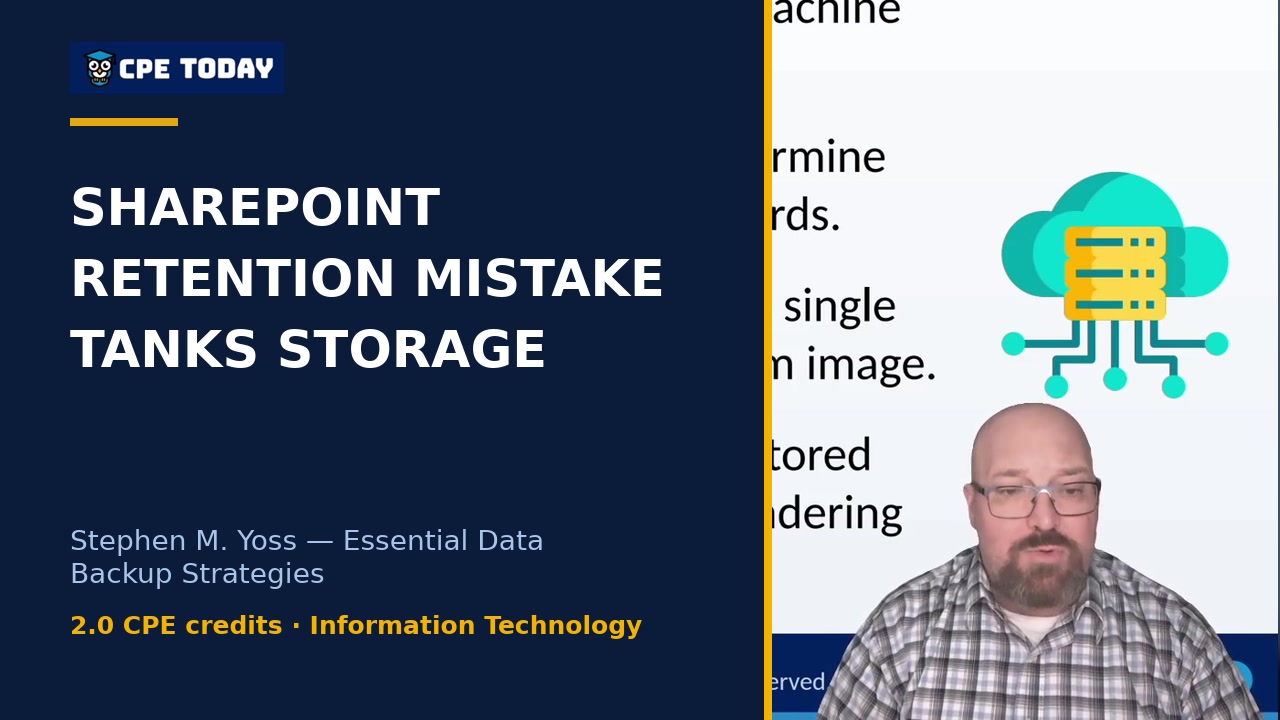
The SharePoint Retention Mistake That Tanked StorageStephen Yoss breaks down a real client case where improper retention settings created 900 versions of a single file, draining storage and budget. Learn why indefinite backup retention doesn't match real restore patterns and how to configure your backup strategy for both cost and practicality. Watch to see if your systems are making the same mistake.
 1:53
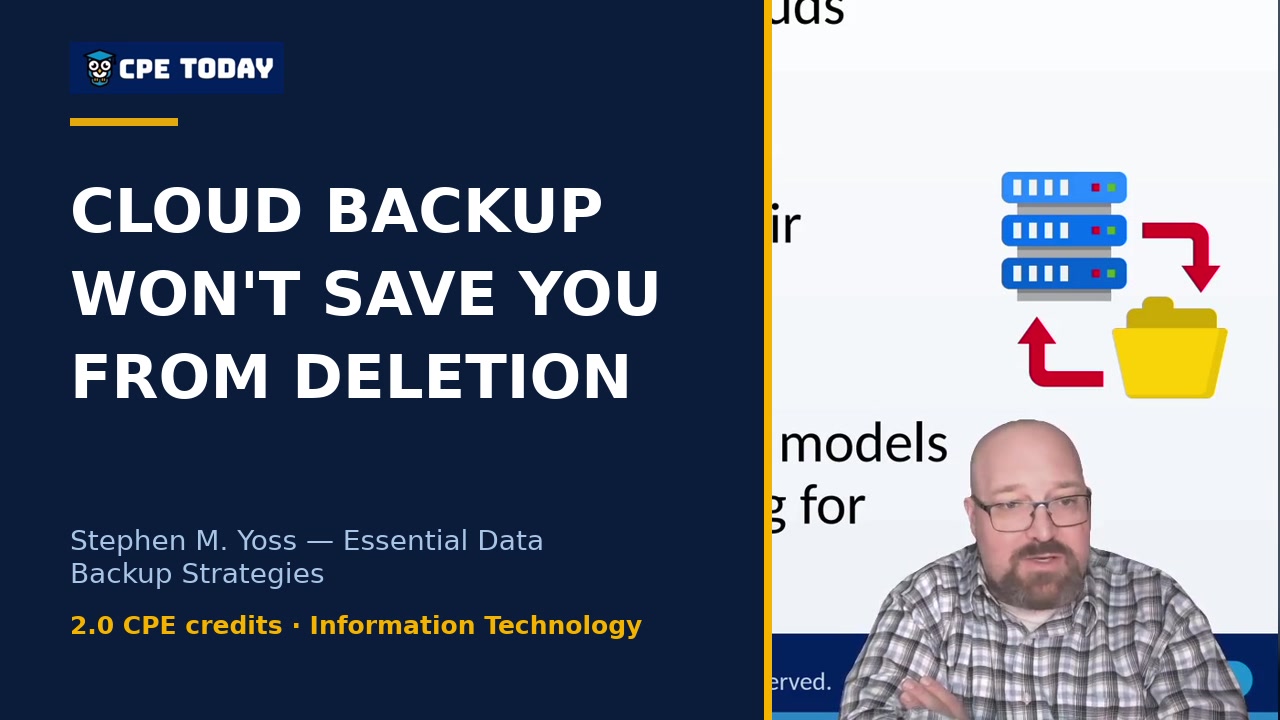
The myth about cloud backup that costs people everythingThink Google Drive or OneDrive backs up your files? Think again. Stephen Yoss breaks down the shared responsibility model that most users miss—and why relying solely on cloud providers leaves you vulnerable. Learn which recovery options actually exist, what gaps remain, and why a multi-layered backup strategy is your real safety net.
 1:47
NAS vs. External Disk: Which Backup Method Actually ScalesStephen M. Yoss breaks down the key differences between single backup disks and network-attached storage (NAS) systems—and why the choice depends on your data growth needs, redundancy requirements, and security. Learn why encryption, snapshots, and off-site replication matter for protecting your files from ransomware and data breaches. Watch to discover the backup strategy that fits your situation.
 1:03
The Backup That Silently Failed at 80%A backup that fails silently is worse than no backup at all. Stephen Yoss shares a real case where his backup reported success but was actually incomplete—missing 8 out of 100 client records. Learn why testing restores is the only way to catch hidden failures before they become critical. Watch to discover how automated restoration testing saved his data.
What's included
Every registration comes with the course materials — yours to keep.
- Course handout PDF
- Course presentation PDF
- Additional course files PDF, ZIP
Course details
- Recommended CPE credit
- 2
- Field of study
- Information Technology
- Program level
- Basic
- Delivery method
- Group Internet Based
- Prerequisites
- None
- Advance preparation
- None
- Course number
- 25c01233
CPE Today (Devmatics, LLC) is registered with the National Association of State Boards of Accountancy (NASBA) as a sponsor of continuing professional education on the National Registry of CPE Sponsors (Sponsor ID 167619). State boards of accountancy have final authority on the acceptance of individual courses for CPE credit. Complaints regarding registered sponsors may be submitted to the National Registry of CPE Sponsors through its website, nasbaregistry.org. For information about our refund, complaint, and program cancellation policies, see Company Policies or contact [email protected].
💬 Ask this course
Not sure it covers what you need? Ask a real question — answered from the actual course content, so you can decide before you enroll.
Reading the course…
Answers come from this course's own material and can be imperfect — the full details are in the course itself.
Your instructor
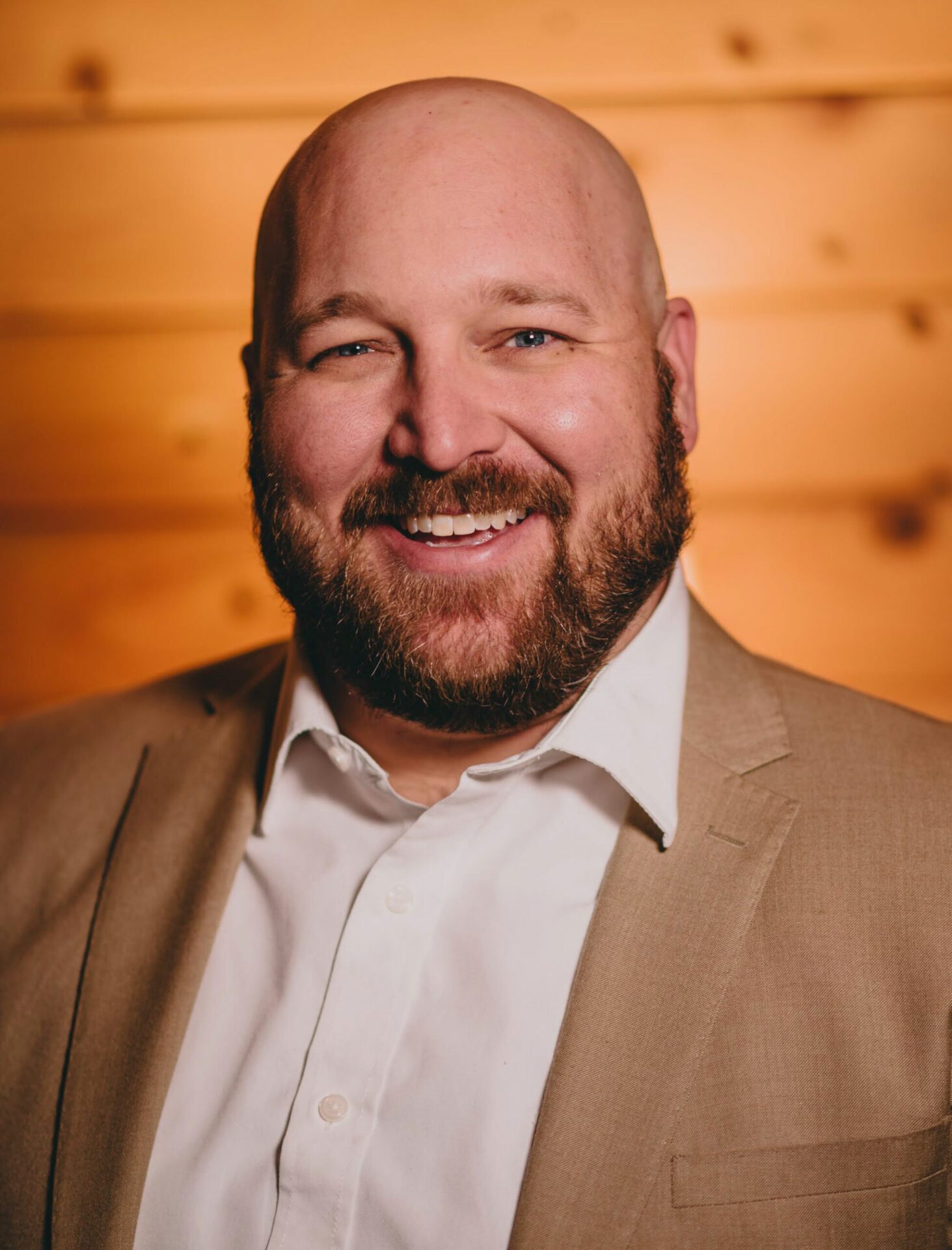
Stephen Yoss
Speaker & Author · CPE Today · ★ 4.7 instructor rating
Stephen M. Yoss, Jr., CPA, MS, is a certified public accountant, partner and CEO of Devmatics, LLC, a continuing education instructor for financial professionals, and a licensed pyrotechnician. While his interests and skills are varied, they all share a common thread—his love for and skill in finding technology-based solutions. In 2017, Stephen and Alex White formed Devmatics, LLC, a company focused on helping...
Full profile →Attendee feedback
4.7
3 attendee ratings
Common questions
I'm a solo CPA with a small practice—is this course really for me, or is it geared toward IT professionals managing enterprise systems?
This course is absolutely for you. Steve walks through solutions at every scale, from personal devices to enterprise systems, and specifically addresses how sole proprietors and small firms should approach backup differently than large organizations. He demonstrates a practical hybrid approach using affordable tools like Synology NAS devices ($200-$1,000) paired with cloud services like CrashPlan ($10/month), which is exactly what a small practice needs—not the complex enterprise setup you'd never implement.
Do I need specialized technical knowledge to set up and maintain the backup systems you'll cover?
No. Steve emphasizes that modern backup tools are designed to be simple and automated, not requiring ongoing technical expertise. He specifically warns against "complex platforms that need dedicated IT to handle day to day" and recommends starting with managed services like Office 365 or Google Workspace, plus a straightforward NAS device with Synology's user-friendly DSM software. The goal is set-it-and-forget-it automation, not technical maintenance.
What software or subscriptions will I actually need to buy to implement what you teach?
You have options depending on your starting point. At minimum: a cloud service you likely already have (Office 365, Google Workspace, or similar) plus either an external hard drive (~$50-200) or a NAS like Synology (~$200-500). For off-site backup, services like CrashPlan cost under $10/month. Steve demonstrates real products by brand and price point throughout the course, and the accompanying book provides vendors and cost comparisons. You can start small and scale up as needed.
After this course, will I actually be able to restore my data if disaster strikes, or is it just theory?
The course emphasizes that a backup is only valuable if you can restore it—Steve dedicates significant time to testing and verification. He demonstrates his own five-layer backup strategy and walks through real scenarios where backups failed during testing (finding only 92 of 100 clients restored), showing exactly how to catch and fix these problems before you need them. You'll learn not just what to back up, but how to verify your backups actually work by running test restores.
How much of this is hands-on setup versus lecture about backup concepts?
The course balances both. Steve teaches core concepts like recovery point objective (RPO) and the 3-2-1 backup rule, then moves into specific product demonstrations—showing the actual Synology NAS hardware, walking through CrashPlan configuration, and explaining cloud provider options like Office 365 and Google Workspace. He uses real business examples (Colonial Pipeline ransomware, Hurricane Katrina's impact on K2 Solutions) to illustrate why the concepts matter, making the theory practical without getting bogged down in deep technical minutiae.
Related reading from our instructors
You might also like
Conference
 Seminar
 Seminar
Happening now
 Seminar