
Information Systems CPE for CPAs: What It Covers and Where to Start

An attendee asked me last year whether their organization should be storing transaction data in a spreadsheet or a database. Simple question on the surface. But behind it was a web of twelve non-integrated systems, a mix of cloud and on-premise platforms, and an AI tool their CFO had just started using to flag anomalies in the general ledger.
If you couldn't picture that whole stack, you couldn't actually answer the question. That's where information systems CPE for accountants sits right now, and it's worth understanding how it differs from information technology CPE, which covers governance and vendor oversight rather than the data layer itself.
Information Systems CPE vs. Information Technology CPE: What's the Difference?
The two terms look similar enough that most people use them interchangeably. They're not the same thing, and confusing them will send you to the wrong course.
Information technology CPE focuses on the governance layer: IT controls, vendor oversight, risk frameworks, and the policies an organization uses to manage its technology environment. Think SOC reports, IT general controls, and the questions an auditor asks about who has access to what and why. It's the domain of IT auditors and practitioners who need to evaluate whether a client's technology environment is well-governed.
Information systems CPE operates one layer down, at the data itself. It covers how organizations collect, store, and move data across spreadsheets, relational databases, and data warehouses, and how finance professionals surface that data through reporting tools like Power BI and Excel.
It also covers how AI and analytics tools integrate directly with firm data to produce output a CFO can act on. The practitioner isn't evaluating the governance structure around a system. They're working inside the system, or advising on how it should be built.
A useful shorthand: IT CPE asks whether the controls around a system are sound. Information systems CPE asks whether the data inside that system is structured, consolidated, and usable. Both matter, and your CPE portfolio should reflect which one you actually need.
Why Information Systems CPE Matters for CPAs Right Now
Client expectations have moved well past the financials. Organizations are running a dozen or more non-integrated systems across a mix of cloud and on-premise platforms, and when something breaks down or a decision needs to be made, they're looking to their CPA to understand the whole picture. Not just the numbers that came out of the system. The system itself.
That creates real risk. When data lives simultaneously in spreadsheets, relational databases, and physical paper, disorganized data is a liability. Finance teams are increasingly the ones expected to flag that exposure, which means the CPA who can't read the data landscape can't actually protect the client from it.
Then there's AI. The conversation has already moved on from whether AI belongs in the finance function. Agentic AI and autonomous systems are actively reshaping how finance teams operate and how organizations measure productivity.
The practitioners who'll evaluate those tools credibly are the ones who understand the underlying information systems they run on. If you don't know how an AI agent integrates with firm data through something like a Model Context Protocol, you can't assess whether it's working correctly or whether it's a risk you've quietly accepted.
Regulatory pressure is tightening on two fronts at once. Digital assets and blockchain are no longer niche concerns. Both the technical mechanics and the regulatory environment around them are moving fast, and the two don't move at the same pace. CPAs advising clients on crypto holdings or auditing those positions are working in an area where the rules are still actively developing, which means knowledge that was current two years ago may already be incomplete.
Quantum computing and intelligent reporting are on a longer horizon, the next decade by most serious estimates, but closer than many practitioners expect. The practitioners who engage with them now, through structured continuing education, are the ones who'll advise clients from a position of understanding rather than scramble to catch up when the shift arrives. That's the actual case for information systems CPE.

What Does Information Systems CPE Actually Cover?
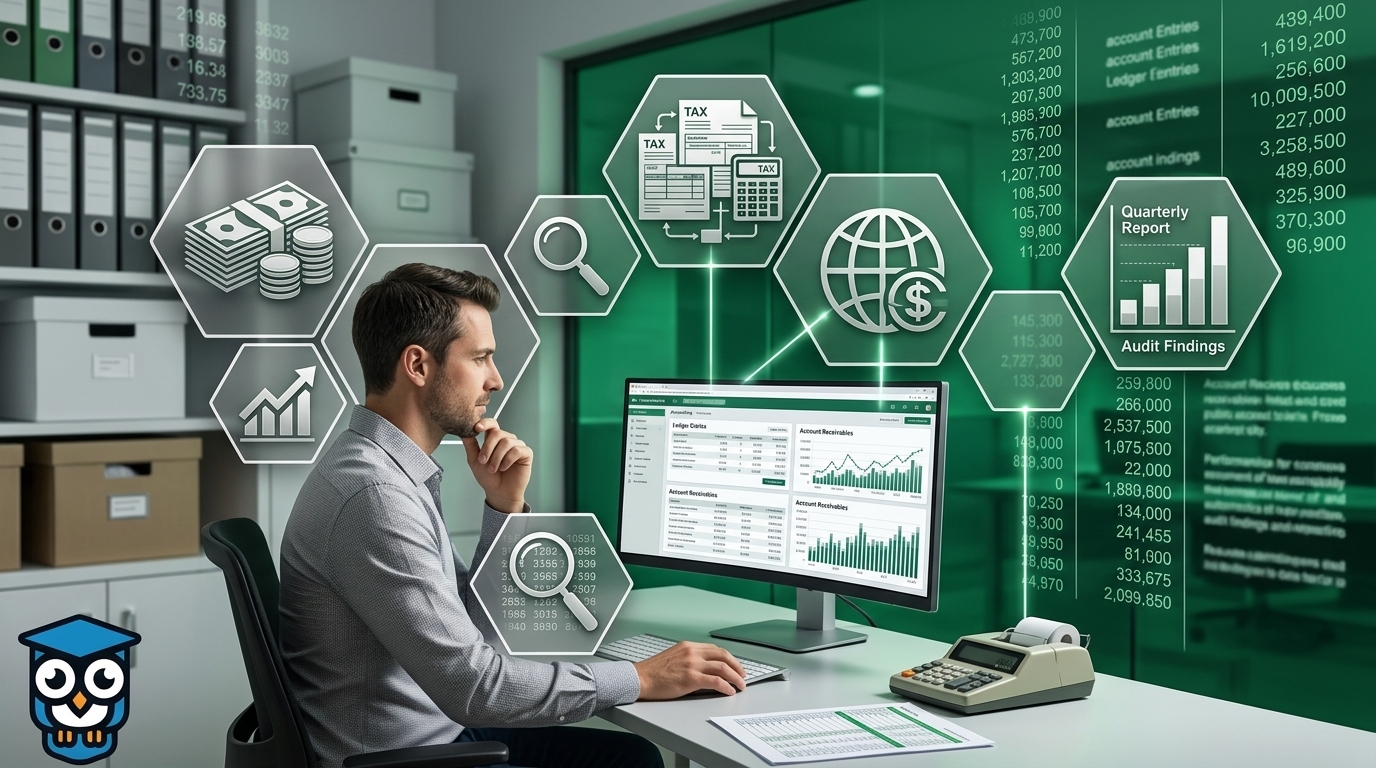
Think of it as the full chain between raw organizational data and the decisions that data is supposed to support. Information systems for accountants covers how organizations collect, store, organize, and report data, and more practically, how finance professionals interact with those systems to produce output that's actually reliable and useful.
That chain has layers. At the bottom is the storage question: should this data live in a spreadsheet, a relational database, or a centralized data warehouse that pulls from a dozen source systems? That's not a rhetorical question. The wrong choice creates fragility. An organization that keeps sales data in four spreadsheets and transaction records in a separate on-premise database can't make clean decisions from any of it until someone consolidates the pile.
Building that data warehouse, whether through a cloud provider like AWS or Azure or a DIY open-source approach, is a core information systems skill for the finance professional who wants to give clients real answers.
Once the data is consolidated, the next layer is surfacing it. Power BI and Excel are the tools most practitioners already have. What information systems CPE teaches is how to use them well: dashboards, KPIs, and graphical reports that turn raw transaction records into something a CFO can act on.
Above that sits the intelligence layer. Big Data, advanced analytics, real-time reporting, and AI tools that integrate directly with firm information through protocols like Model Context Protocols (MCP) all live here. This is where agentic workflows and anomaly detection enter the picture, and where the practitioner's job shifts from data entry to data oversight.
Digital assets belong in this conversation too. Blockchain infrastructure, cryptocurrency, and the regulatory updates that govern how these assets get recorded and reported are now standard topics in information systems CPE for CPAs. You can't audit what you don't understand mechanically.
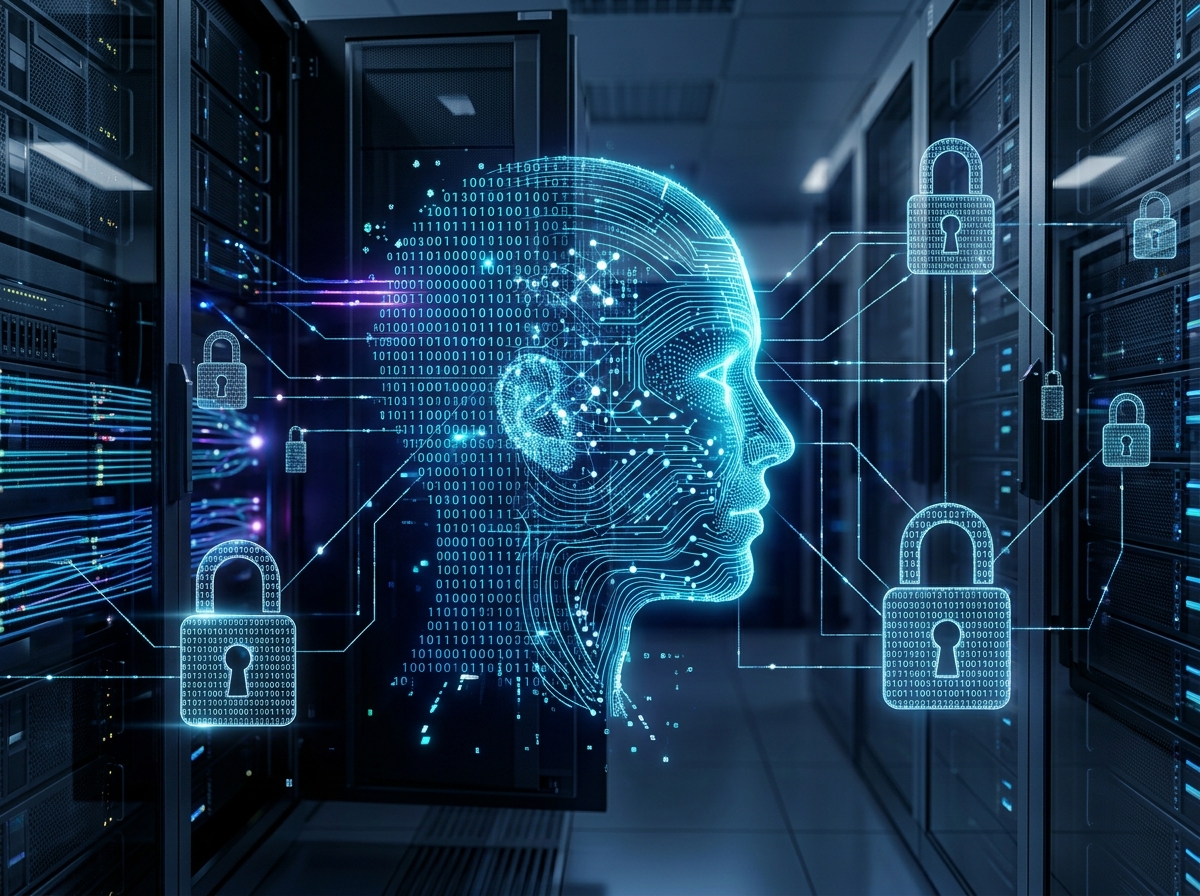
Data security runs through all of it. Understanding the difference between a standard privacy setting and a closed-loop enterprise system isn't an IT question. It's a professional responsibility question, and it belongs to the practitioner, not the help desk.
Key Things to Get Right When Working with Information Systems
The spreadsheet-versus-database question isn't academic. Pick the wrong tool and you've built something that works fine at fifty rows and falls apart at fifty thousand. A spreadsheet is a great calculator and a terrible system of record. A relational database handles volume and relationships well, but it's not a reporting layer. A full data warehouse centralizes feeds from multiple source systems and gives analysts something they can actually query across. Each one has its place, and the mistake is reaching for the familiar tool instead of the right one.
Which brings up the rule that saves the most time: centralize before you analyze. An organization running eight non-integrated systems across cloud and on-premise platforms doesn't have a data problem, it has a consolidation problem. Whether you route that into a cloud provider like AWS or Azure, or build something yourself with open-source tools, the trade-offs are real: cost, control, maintenance burden, and how fast the team can actually get to insights. There's no universal answer, but there is a wrong sequence, and analyzing before you consolidate is it.
Once AI enters the workflow, the discipline shifts. Moving from basic prompting to multi-step agentic workflows for anomaly detection and variance analysis is genuinely powerful. It's also where practitioners get into trouble. A structured AI audit process isn't optional overhead. It's the mechanism that catches hallucinations before they reach a client deliverable. You need to be able to compare outputs, challenge narratives, and validate results the same way you'd review any other analytical work product.
Data security follows the same logic. What goes into a public LLM, what stays inside a closed enterprise system, and how client information is classified along the way are professional responsibility questions, not IT questions. That tiered thinking has to be deliberate.
Raw numbers still need context to be useful. Transaction records and sales figures become decisions when they're surfaced as dashboards and KPIs that a non-technical stakeholder can act on. That transformation is the job.
Finally, the crypto and blockchain landscape is moving fast enough that knowledge from two years ago may be actively misleading. CPAs advising on or auditing digital assets need current understanding of both the technical mechanics and the regulatory environment around them. The two don't move at the same pace, and the gap between them is where the risk lives.
How Information Systems CPE Courses Earn Credit — and What to Confirm First
Courses covering information systems, data management, AI integration, and digital assets typically qualify for continuing professional education credit for CPAs. The specific number of credits you earn depends on two things: the course length and whether the provider holds NASBA sponsorship. A NASBA-registered provider has agreed to follow the standards that most state boards use to evaluate CPE. You can verify any provider's status at nasba.org, and that sponsorship is the first thing to confirm before you register.
The courses promoted here, on AI workflows, data warehousing, and digital assets, are filed under Information Technology as their NASBA field of study. Field-of-study classification is not uniform across the broader market: other providers covering similar topics may use different designations, and what counts toward a specific requirement varies by state board. Don't assume. Pull up your state board's requirements and cross-reference them with the field-of-study designation on the course certificate before you count on the credit fitting where you need it.
One practical advantage of this subject area is that it covers a real range of levels. A basic course on building a data warehouse and working with reporting tools earns credit alongside an intermediate course on advanced AI analytical workflows. That means you can build a logical progression over a few reporting periods rather than taking the same introductory material twice or jumping straight into content that assumes knowledge you haven't formalized yet.
There's also an efficiency argument worth making for practitioners managing a broad CPE portfolio. A single course on emerging technology can address data security, regulatory updates for digital assets, and analytical methodology in one sitting. Those topics genuinely overlap in practice, and a well-designed course reflects that. If data security is a gap you need to close separately, the cyber security CPE requirements for accountants are worth reviewing alongside your information systems credits. The material actually connects.
Delivery formats in this space tend to be self-study or webinar, which matters if you're fitting CPE around an active client load. You can work through a course on a Sunday afternoon or during a slow week in the off-season without blocking out conference travel time. Browse the full catalog of technology and data courses to see what's available at each level and format.
Which Information Systems CPE Course Fits Where You Are Now
Three courses in the catalog cover this ground directly, and they're structured so you can start at the right level rather than sitting through material you already know.
Getting Ahead of the Emerging Technology Curve: AI, Data Intelligence, and Digital Crypto Assets is the right starting point if you want a strategic map of where things are heading. It's a basic-level course, which doesn't mean lightweight. It means it doesn't assume you already know how agentic AI differs from generative AI, or how Model Context Protocols fit into a firm's data ecosystem. The course works through the shift from generative to agentic AI and autonomous systems, moves into Big Data and intelligent reporting, and then covers blockchain and crypto assets alongside current regulatory updates.
If you need cryptocurrency CPE credit alongside AI and data intelligence, this course covers all three in a single sitting. If a client has asked you about any of those topics and you've felt like you were a step behind, this is where to start. Credit hours are listed on the course page. Confirm the total and the field-of-study designation before you register.
AI as Your Partner: Advanced Financial Analysis Beyond Basic Prompting picks up where that overview leaves off. It's an intermediate course, and it earns that label. The focus is on building sequential AI analytical agents that handle multi-step tasks like variance analysis and anomaly detection, not just writing better prompts. You'll also work through a tiered data security framework that addresses the real professional responsibility question: what client information is appropriate for a public LLM, and what has to stay inside a closed enterprise system. There's a structured process for auditing AI outputs and catching hallucinations before they reach a client. If you're already using ChatGPT or Copilot in your practice and want a framework that holds up under professional scrutiny, this is the course. Check the course page for credit hours and field-of-study classification before you count it toward your requirements.
Building a Data Warehouse — Getting All Your Data in One Place is a basic-level course focused on data infrastructure. It walks through how to centralize data from multiple non-integrated systems, covering cloud-based options like AWS and Azure as well as a DIY approach using open-source technologies, then addresses the reporting layer in Power BI and Excel. It's the most operationally focused of the three. The goal is building something that actually works, not surveying what's on the horizon. Credit hours and the field-of-study designation are on the course page; verify both against your state board's requirements before registering.
All three are available now. Browse the full catalog of information systems courses for CPAs to find the right fit for your current level and CPE requirements.
Frequently Asked Questions
What is information systems in accounting?
Information systems in accounting covers the full chain between raw organizational data and the decisions that data is supposed to support. That includes how organizations collect, store, and organize data across tools like spreadsheets, relational databases, and data warehouses, as well as how finance professionals surface that data through reporting layers like Power BI and Excel. It also includes the intelligence layer on top: AI integration, Big Data analytics, digital asset infrastructure, and the data security frameworks that govern all of it. For a CPA, understanding information systems means being able to evaluate not just the numbers coming out of a system, but the system producing them.
How does information systems earn CPE credit?
Courses covering information systems topics — data warehousing, AI workflows, digital assets, data security — typically qualify for continuing professional education credit for CPAs when offered by a NASBA-registered provider. The number of credits depends on course length. The field-of-study classification varies by provider and state board, so confirm the designation on your certificate matches your state board's requirements before you register. Both basic and intermediate levels are available, so you can build a logical progression without repeating ground you've already covered.
What's the difference between a spreadsheet, a database, and a data warehouse?
A spreadsheet is a strong calculation tool and a poor system of record — it works at small scale and gets fragile fast as volume grows. A relational database handles volume and complex relationships well, but it isn't a reporting layer on its own. A data warehouse centralizes feeds from multiple source systems into a single environment that analysts can actually query across. The right choice depends on the organization's scale and how many source systems need to talk to each other. Using the familiar tool instead of the right one is one of the most common and costly data infrastructure mistakes.
Do information systems CPE courses cover AI and crypto assets?
Yes. Information systems CPE for CPAs now routinely addresses AI integration — including the shift from basic prompting to agentic, multi-step workflows — as well as blockchain infrastructure, cryptocurrency mechanics, and current regulatory updates affecting how digital assets are recorded and reported. Courses at the basic level provide strategic overviews of these topics, while intermediate courses go deeper into workflow design, anomaly detection, and data security frameworks for AI tools.
How do I find information systems CPE courses that fit my current level?
Start by identifying whether you need a strategic overview or hands-on workflow training. A basic-level course is the right entry point if you want to understand how agentic AI, Big Data, and digital assets fit together without assuming prior technical knowledge. An intermediate course makes sense if you're already using AI tools in practice and want to build more structured, auditable workflows. You can browse courses by topic and level in the information systems courses catalog to find options matched to where you are now.
Test Your Knowledge
An organization is running ten non-integrated systems across cloud and on-premise platforms and wants to start using AI to flag anomalies in its financial data. What should happen first?