
Identity Theft CPE for CPAs: Have You Actually Tested Your Controls?
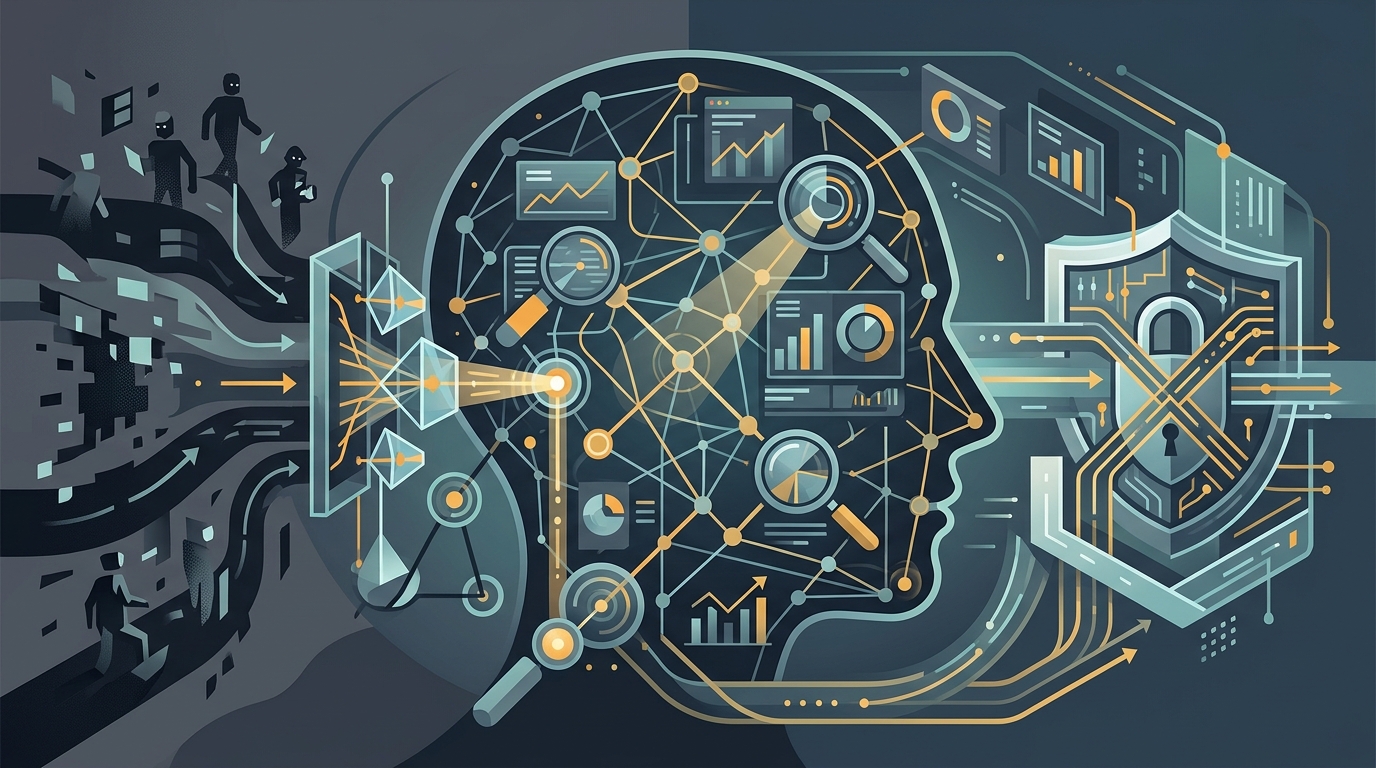
A few years ago, a colleague of mine lost a client's tax identity to a phishing email that looked exactly like a message from the IRS. He was a sharp, experienced CPA who ran a tight practice. He had antivirus software. He had a firewall. He had, in his own words, "all the right stuff." What he didn't have was a way to measure whether any of it was actually working.
That's where identity theft CPE comes in. It's one of the most defensible places a CPA can put their annual continuing education hours, and the reason is exactly what happened to my colleague. If you're a financial professional handling sensitive client data in 2026, the question isn't whether you have controls in place. It's whether you've ever tested them.
Why Identity Theft Matters for CPAs Right Now
The office perimeter is gone. In 2026, your firm's workspace is wherever your staff has a browser and a login, which means your attack surface is everywhere those things exist. The cloud-based environment that makes remote work practical is the same one that makes Business Email Compromise, ransomware, and credential theft more persistent and harder to contain than they've ever been.
That's not a theoretical risk. It's the operational reality your clients are trusting you to manage.
The professional standard for cybersecurity due diligence has never been higher. Regulators and the courts are watching what you did before something went wrong, not just what you did after. The baseline your practice is being measured against keeps moving, and standing still is the same as falling behind.
Automation is a big part of why this feels different now. Attackers aren't manually crafting every phishing email or probing your network one port at a time. They're running tools that do it continuously and at volume, which makes detection genuinely harder. A threat that used to require a skilled human on the other end can now run overnight without one. AI-driven attacks have shifted from requiring specialized human expertise to operating autonomously at machine speed, according to the World Economic Forum.
Client trust is the foundation of a CPA practice, and a single breach can put it in serious jeopardy. The costs aren't only financial, though a major breach can run into the millions. The reputational damage is harder to price and slower to recover from.
There's also a liability dimension that many firms haven't fully thought through yet. When a staff member uses an unauthorized AI tool to process sensitive client data, they're making a confidentiality decision on behalf of the firm, whether they know it or not. If something goes wrong, the firm owns that risk. Staying current on courses covering identity theft and data security is one of the clearest ways to demonstrate that your team is meeting the standard of care the profession now expects.
What Is Identity Theft in Accounting?
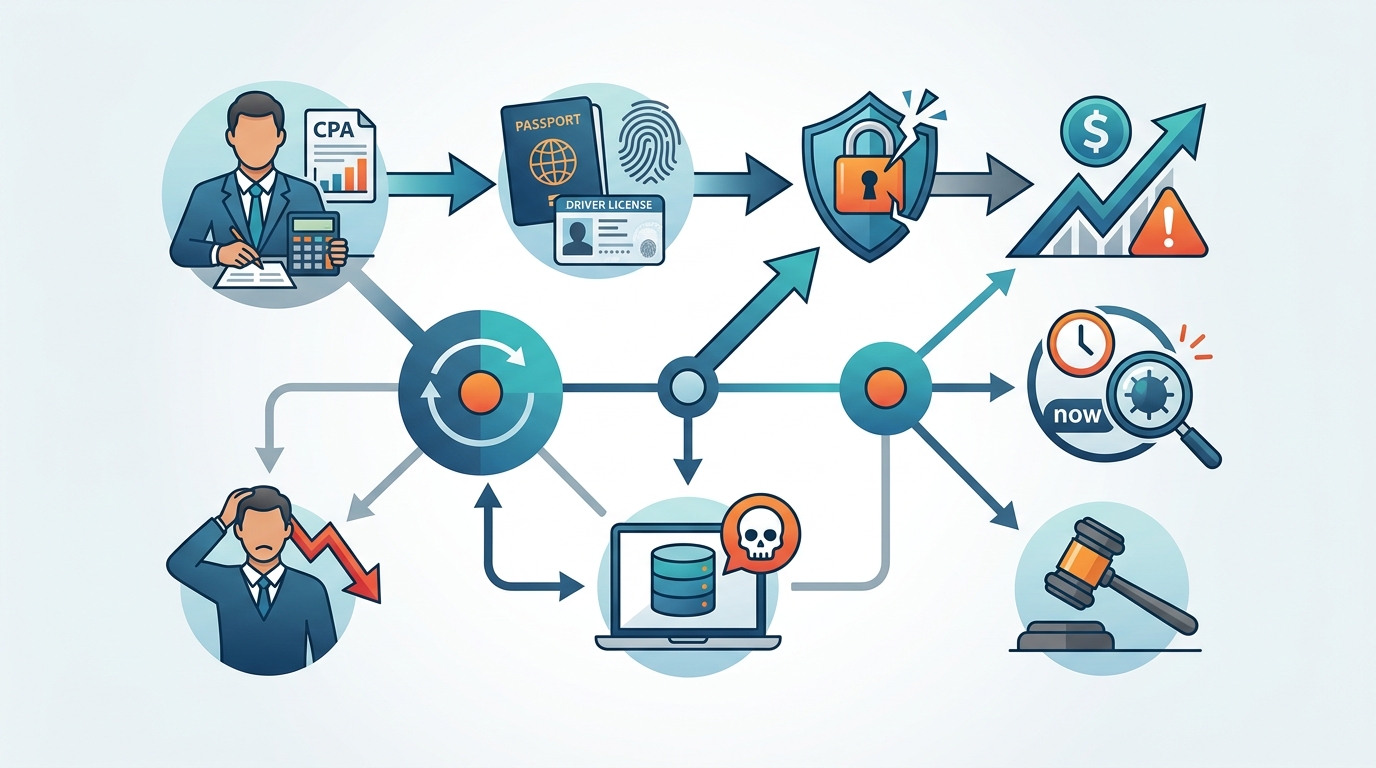
When an attacker compromises a client's credentials or your firm's authentication layer, the problem sits at the intersection of two things you're already responsible for: identity management and data integrity. They don't just steal data. They corrupt the chain of trust that makes your work credible. That's a different problem than a stolen wallet, and it demands a different mental model.
Modern ransomware is the clearest example of how that plays out. Attackers don't kick the door in. They get a foothold, usually through a phishing email or a stolen credential, and then, in a pattern commonly reported across major incident response investigations, they sit quietly inside your network and map it. They identify your most sensitive files, your backups, your billing records. Then they encrypt everything at once and ask for payment. Financial entities are prime targets because the data is both sensitive and time-critical. A firm that can't access client records during tax season is a firm under real pressure to pay.
The financial stakes are not abstract. According to the IBM Cost of a Data Breach Report 2024, the average total cost of a data breach reached $4.88 million globally, with the US average significantly higher. For a CPA firm, where client relationships are built on confidentiality, even a breach that costs far less than the global average can be practice-ending once you factor in the reputational damage.
Business Email Compromise has followed a similar arc. The original version was a human writing a convincing email. The 2026 version uses automated tooling that harvests your communication patterns, mimics your writing style, and sends fraudulent payment instructions at volume, with variants tailored enough that no two look identical. As the World Economic Forum has noted, AI-driven attacks now operate autonomously and continuously at machine speed, which is exactly what makes volume-based BEC harder to catch than the hand-crafted version it replaced.
Social engineering sits underneath all of this. Technical controls can stop a lot, but they can't stop a staff member who genuinely believes they're talking to the firm's managing partner. Attackers study org charts, LinkedIn profiles, and email signatures. They exploit urgency and authority, and they do it by manufacturing familiarity, not by finding software vulnerabilities.
That's the sharpest difference between a traditional data breach and the persistent threats facing finance teams now. A traditional breach was an event you could date. Today's threats are ongoing, adaptive, and often already inside before anyone notices they've arrived.
Key Things to Get Right in Your Practice
Zero Trust is the right starting point, and the name tells you exactly what it means: trust nothing, verify everything. In a cloud-based environment, there's no longer an inside and an outside. Every login, every device, every request to access client data gets treated as potentially hostile until it proves otherwise. That's not paranoia. It's the only model that makes sense when your perimeter is a browser tab on someone's home network. If you want a concrete reference to build from, NIST SP 800-207 is the standard document for Zero Trust architecture and it's freely available at csrc.nist.gov. If you'd rather work through a practical framework designed specifically for CPA firms, the Cybersecurity 2026 Defense for CPAs course covers Zero Trust implementation in a cloud-based environment step by step.
Authentication is where most firms are still underbuilt. A strong password is not a perimeter. Multi-factor authentication isn't optional anymore; it's the floor. If your staff can reach client records with a username and a password alone, you have a single point of failure that attackers specifically look for and exploit at scale.
Data governance is the piece that tends to get skipped because it feels bureaucratic. But when a staff member runs client financials through an unsanctioned AI tool to save an hour, they've just moved sensitive data outside every control you've built. You need a clear policy on what software is authorized for client work, and you need people to understand why it matters, not just that it's a rule.
On the testing side, you don't need a large budget to find out where you're exposed. Shodan is a low-cost option that lets you see your own network the way an attacker would. It scans for internet-facing devices and open ports you may not know about. For phishing simulation, GoPhish is a well-known open-source platform that lets you run simulated phishing campaigns against your own team. Neither requires a security consultant. Both will show you things you didn't expect.
DIY penetration testing, running the same techniques an attacker would use against your own setup, is how you close holes before someone else finds them. The point isn't to break anything. It's to find the gaps while you still control what happens next.
Recovery planning belongs here too. A plan that only tells you to call your IT vendor isn't a plan. It's a prayer. A real recovery plan identifies your most critical data, defines who does what in the first 24 hours, and includes tested restoration procedures so you know your backups actually work before you need them.
- Apply Zero Trust principles
Require verification for every access request, regardless of where it originates — there's no trusted inside in a cloud-based environment.
- Enable MFA on every client-data system
A username and password alone is a single point of failure attackers specifically target. Turn on multi-factor authentication for every system that touches client data, with no exceptions — MFA closes that gap without significant cost or complexity.
- Audit your software inventory
If a tool isn't on the approved list, it shouldn't be handling client information. Unsanctioned software moves sensitive data outside every control you've built.
- Scan your network with Shodan
Shodan scans for internet-exposed devices and open ports the way an attacker would. Run it against your own network to find forgotten services and open ports you didn't know were visible before someone else does.
- Simulate a phishing attack on your team
GoPhish (open-source, available at getgophish.com) lets you run a simulated phishing campaign against your own team so you know who clicks before a real attacker finds out first.
- Test your backups
Restoration procedures that have never been run are assumptions, not controls. A backup you haven't tested is a backup you can't rely on when it matters.
- Document your recovery plan with named roles
A general outline isn't a plan. Named roles and a concrete sequence of steps mean your team knows exactly what to do in the first 24 hours after something goes wrong.
How Identity Theft CPE for CPAs Works — and What It Covers
These courses file under Information Technology as their NASBA field of study, which means the hours you spend on identity management, ransomware defense, and authentication protocols count directly toward your continuing professional education requirements. That's not an accident of categorization. Information Technology is where the profession has decided this knowledge belongs, and for CPAs handling client data in 2026, it's one of the most defensible places to put your annual hours. If you want a fuller picture of what that field of study covers beyond identity theft, the guide to what information technology CPE actually covers is worth reading before you choose a course.
Staying current on identity management isn't a compliance checkbox. Your state board expects you to demonstrate ongoing competence in the areas that affect your practice, and the threat environment your clients face is moving fast. The WEF Global Cybersecurity Outlook 2025 found that 72% of respondents reported a rise in cyber risks, and 63% identified the complex and evolving threat landscape as their single greatest challenge. A CPA who completed a cybersecurity course in 2019 and hasn't touched the subject since is working from a map of a city that no longer exists. The professional development requirement exists precisely to prevent that drift.
All three courses here are rated Basic level, and that's intentional. Basic doesn't mean simple. It means foundational. When the underlying threats are evolving continuously, returning to first principles on a regular cycle is how you make sure your defenses didn't quietly become obsolete while you were busy doing client work. A practitioner who genuinely understands how ransomware gets its initial foothold is better protected than one who skimmed an advanced course and retained the vocabulary without the judgment.
The scenario-based structure of this coursework is also worth understanding from a licensure standpoint. Boards and regulators don't just want you to have sat through hours. They want evidence of applied learning. Working through real-world breach scenarios, analyzing what went wrong in a BEC incident, or running a simulated phishing test against your own network produces the kind of practical competence that continuing education courses on identity theft for accountants are designed to build and document. That's learning you can actually use, and it's the kind that holds up if anyone ever asks what you did to prepare. For a broader look at how cybersecurity CPE requirements apply to your role and renewal deadline, see the complete guide to cyber security CPE for accountants.
Where to Go Deeper
Critical Tips for Avoiding Identity Theft & Data Breaches is the right place to start if your team needs a solid foundation. It walks through the mechanics of how attacks actually happen, the specific tactics cybercriminals use, how breaches play out against financial entities, and what a real recovery plan looks like after something goes wrong. The learning objectives are practical: you'll leave knowing how to analyze real-world scenarios, apply best practices for protecting client data, and build a recovery process that does more than just react. If your current plan is a folder on a shared drive that nobody has opened since the last time someone mentioned the word "audit," this course is where to start. Enroll in Critical Tips for Avoiding Identity Theft & Data Breaches.
Cybersecurity 2026 Defense for CPAs is the current-year update for practitioners who already understand the basics but want a sharper picture of the threat landscape right now. It goes deep on Business Email Compromise and how automated tooling has made it harder to catch, walks through the full lifecycle of a modern ransomware attack so you can build more effective firm-wide defenses, and tackles the confidentiality risks that come with staff using unsanctioned AI tools for client work, a risk most firms haven't fully addressed yet. The course also covers practical Zero Trust frameworks you can apply in a cloud-based environment and examines how the professional minimum standard for cybersecurity due diligence has reached a point where standing still is no longer an option. Enroll in Cybersecurity 2026 Defense for CPAs.
DIY Penetration Testing for Your Home and Organization is for the practitioner who wants to move from knowing the theory to actually testing it. The course focuses on hands-on, do-it-yourself methods you can run against your own office network without hiring a security consultant. You'll work with tools like Shodan, which shows you your network the way an attacker sees it, including exposed devices and open ports you may not know about, and GoPhish, the open-source phishing simulation platform that lets you find out who on your team clicks before a real attacker does. The goal is to identify the gaps yourself, while you still control what happens next. It's built for any level of technical background. Enroll in DIY Penetration Testing for Your Home and Organization.
Frequently Asked Questions
What is identity theft in accounting?
For financial professionals, identity theft sits at the intersection of identity management and data integrity. It's not just a stolen Social Security number — it's the compromise of credentials or authentication systems that corrupts the chain of trust your work depends on. When an attacker gets into your firm's systems, they can access client records, redirect payments through Business Email Compromise, or encrypt your files with ransomware and demand payment. The damage is both financial and reputational, and financial entities are prime targets because the data is sensitive and time-critical.
How does identity theft earn CPE credit?
Courses covering identity theft, ransomware defense, authentication protocols, and related cybersecurity topics file under Information Technology as their NASBA field of study. The hours count directly toward your continuing professional education requirements as a CPA. Your state board expects you to demonstrate ongoing competence in areas that affect your practice, and cybersecurity is firmly in that category for anyone handling client data.
What is an identity theft CPE course, and who should take one?
An identity theft CPE course is a continuing education course that teaches financial professionals how attacks happen, how to prevent them, and how to recover when something goes wrong. They're built for CPAs, accountants, and other financial professionals who handle sensitive client data and need to meet professional development requirements. Courses at this level are rated Basic — foundational by design — so the material starts from first principles rather than assuming prior technical expertise.
Do I need advanced technical knowledge to benefit from identity theft CPE for CPAs?
No. The courses covered here are rated Basic level, which means they're designed to build a practical foundation rather than assume prior technical expertise. Basic doesn't mean superficial — it means the material starts from first principles and gives you a working mental model of the threats your firm faces, regardless of your technical background. The goal is practical knowledge you can apply, not certification in network engineering.
How often should CPAs update their cybersecurity training?
The threat landscape changes fast enough that training from even a few years ago may not reflect current attack methods. Ransomware, Business Email Compromise, and social engineering tactics have all evolved significantly in recent years, and the professional standard for cybersecurity due diligence keeps moving with them. Revisiting Information Technology-category CPE annually is a reasonable baseline for any practice that handles client financial data.
Quick Check: How Well Do You Know Your Firm's Exposure?
An attacker gains access to your network through a phishing email and stays quiet for several weeks before acting. What is the most likely goal of that waiting period?